|
|
|
|
|
|
Machine Stitch Technique
|
|||
|
Sampling Basic Machine
Stitching
|
 |
|
 |
|
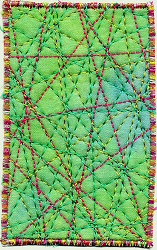
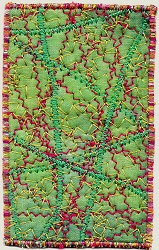
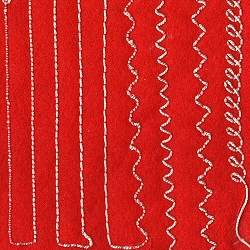
With feed dogs engaged and using
|
|||
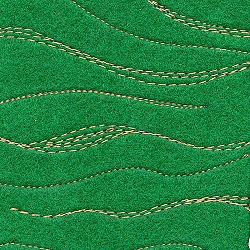
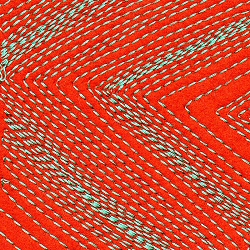
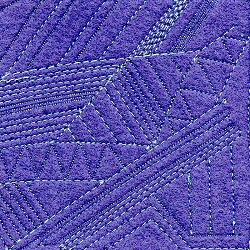
| See
examples of straight stitch on the right . . .
(Click on pictures to enlarge) |
 |
 |
 |
|
|
 |
 |
 |
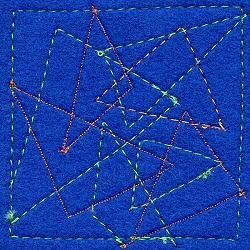
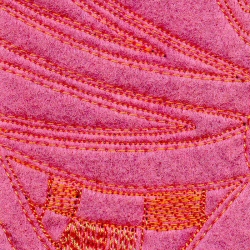
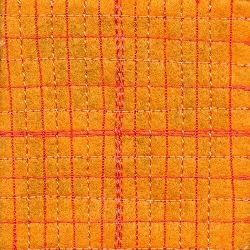
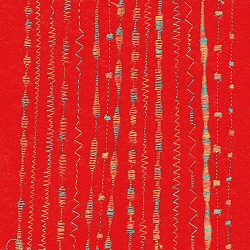
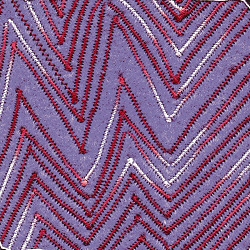
| See
examples of zig zag stitch on the right . . .
(Click on pictures to enlarge) |
 |
 |
 |
 |
 |
| Free
Motion Stitching Using a darning / free motion foot, and the feed dogs down ( disengaged )
Straight stitch = st
length zero
|
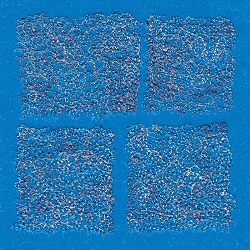
Free straight stitch (Granite stitch) Worked in a small circular motion |
 |
 |
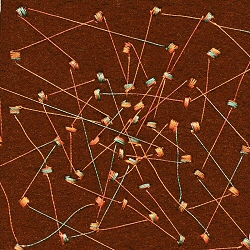 |
| Free
zig-zag stitch, worked using a side to side motion |
Free
zig-zag stitch, randomly linked spots. |
|
Altering Tensions By altering the upper and / or bobbin tensions a variety of stitching effects can be achieved with both straight stitch and zig-zag stitch. It is possible to work either in free motion or standard set up. |
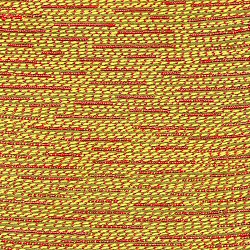 |
 |
| (A) | (B) |
| Playing with the
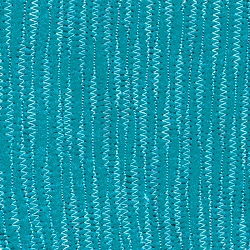
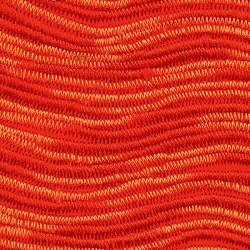
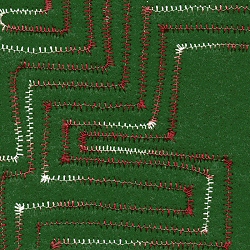
Top Tension (1) Standard Set Up (A) shows lines of straight stitch worked in close parallel rows. The top tension has been tightened, so that the bobbin thread is brought to the surface and whilst stitching the length has been changed randomly to one of the two selected stitch lengths, in this case .5 and 2.5 (B) shows lines of zig-zag stitch turning through 90 degrees. Again the top tension has been tightened so that the variegated thread in the bobbin is pulled to the surface on both sides of the stitch. In this case the length and width are consistent throughout. |
|
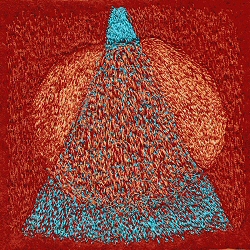
Playing with the Top Tension (2) Free-motion Set Up |
 |
 |
| (A) | (B) |
| (A) shows free
machined straight stitch using a tightened top tension. The
resulting stitch is known as Whip Stitch. Stitch length
value should be zero, although the speed you feed the work through the
machine should be quite slow and the machine's running speed quite fast,
it is the individual who determines the success of the effect.
Practice ! ! ! (B) shows free zig-zag using a tightened top tension to mix colours. Only three colours were used but the effect of the bobbin thread being brought to the surface creates a blending. In this case one or other of the geometric shapes appears to be translucent. The whole sample was worked in a sideways motion within the given shapes and areas, swapping the three colours between the bobbin and machine thread, as necessary. |
| Playing with Both Top and Bottom Tensions (3) |
|
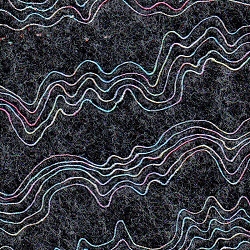
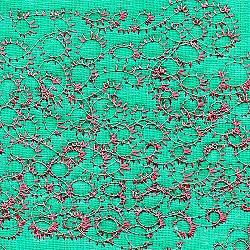
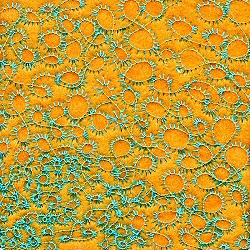
By maintaining a tight top tension and loosening the bobbin tension spring
it is possible to create some very textural and unusual effects.
The best results are gained working in free motion mode. |
 |
(1) |
 |
(2) |
|
Click on pictures to enlarge |
|
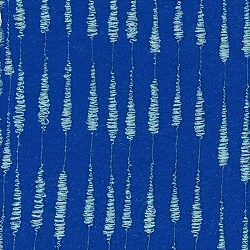
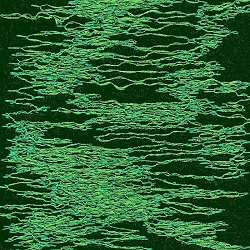
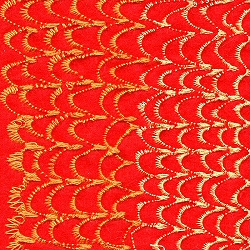
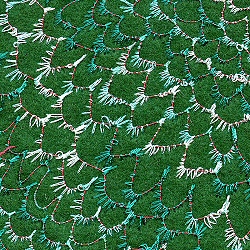
Unlike whip stitch where the machine runs fast and the fabric is fed under the needle slowly, with feather stitch the fabric is moved fairly quickly and in large or small circular motion. See examples (1) and (2) on the right. By working in one direction, laying down parallel lines of stitck and keeping the curves tight it's possible to replicate designs that could be used for scales or feathers. See examples (3) and (4) on the right. |
 |
(3) |
 |
(4) |
| Bobbin
Work (4) Using a firm bobbin thread and engaged feed dogs : |
| By
using thicker threads in the bobbin, altering upper and lower tensions and
stitching with the right side of the work facing down on the needle plate,
it is possible to create interesting, raised and textured forms of
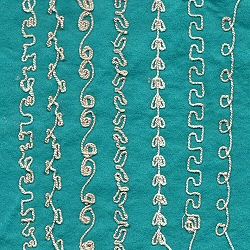
stiching. Generally known as cable stitch or bobbin work. Apart from using different weights and thicknesses of thread in the bobbin to achieve a variety of results, changing stitch lengths can also affect the outcome.
|
Stitch length 1 - 5 |
Some automated stitches using increased stitch length |
||||
 |
 |
|||||
|
Click on pictures to enlarge |
|
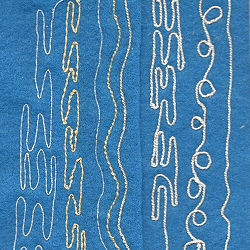
Free-motion cabling using differing threads in the bobbin. |
|
Bobbin work can be done using standard and free machining methods.
Some automatic patterns can also be done this way, but always
use a stabilizer when not in standard mode. |
Notice how the thickness and firmness of the bobbin thread affect the look of the cable stitches. The yellow thread is much softer and is taken down into the fabric, whilst the others stay proud of the surface. |
 |
|
Techniques to create textured surfaces. |
|
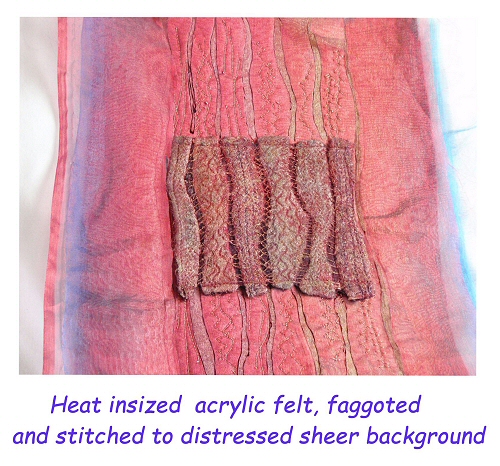
Carved Felt |
 |
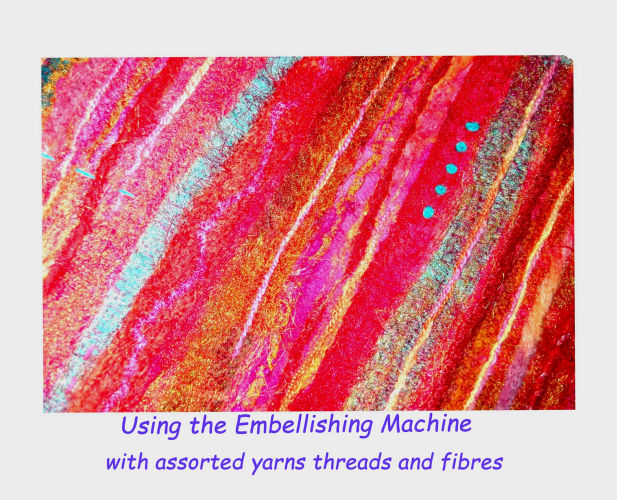 |
Embellishing |
|
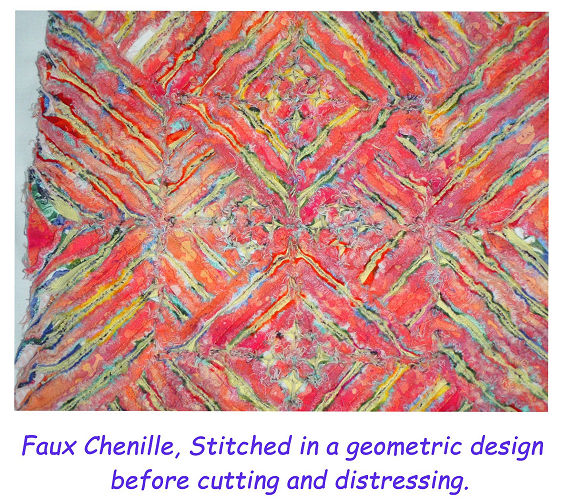
Faux Chenille |
 |
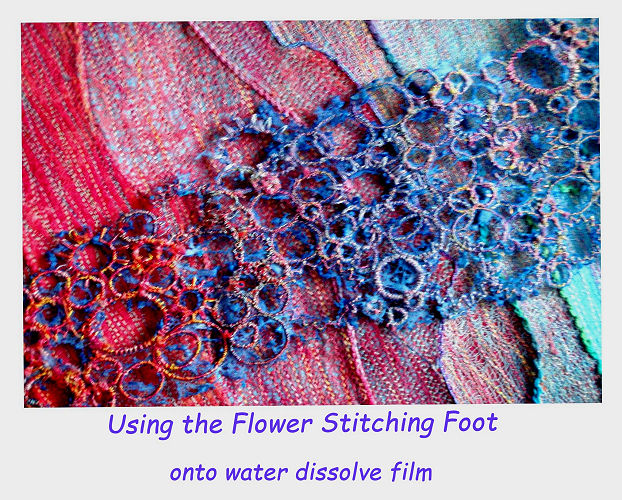 |
Flower Stitching Foot |
|
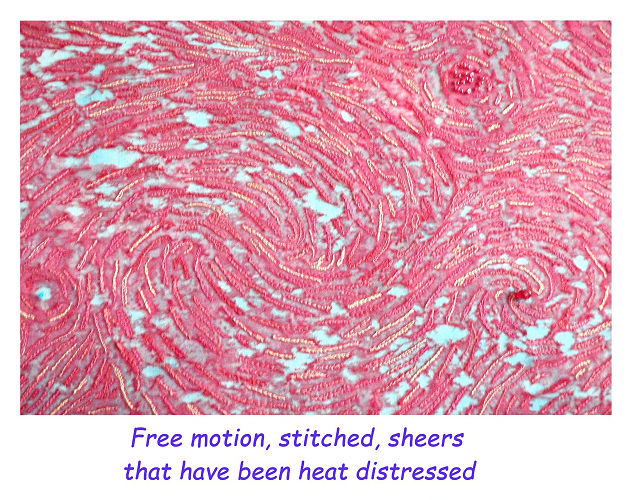
Heat Distressed Sheers |
|
|
|
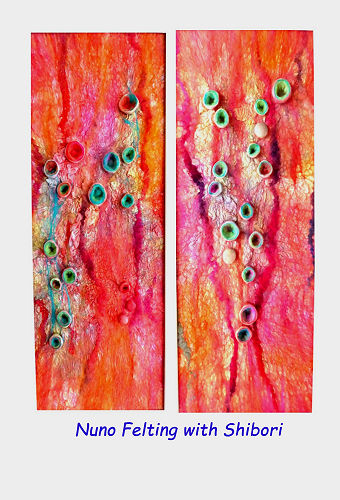
Nuno Felting |
|
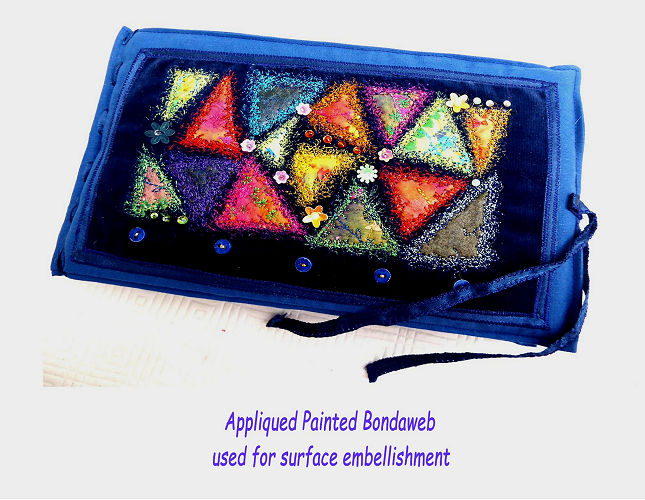
Painted Bondaweb |
|
|
|
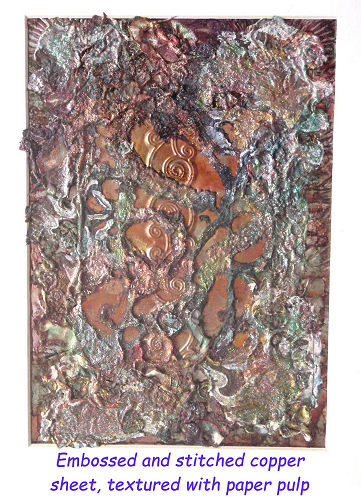
Stitched Copper |
|
Xpanda Print with Stitching |
|
|
Copyright Wandering Threads Creative Textiles |